How to Read Case Interview Exhibits and Charts (2026 Guide)
A four-step method for reading case interview exhibits under pressure — what to say in the first 30 seconds, the insight hierarchy interviewers listen for, and how to drill it.
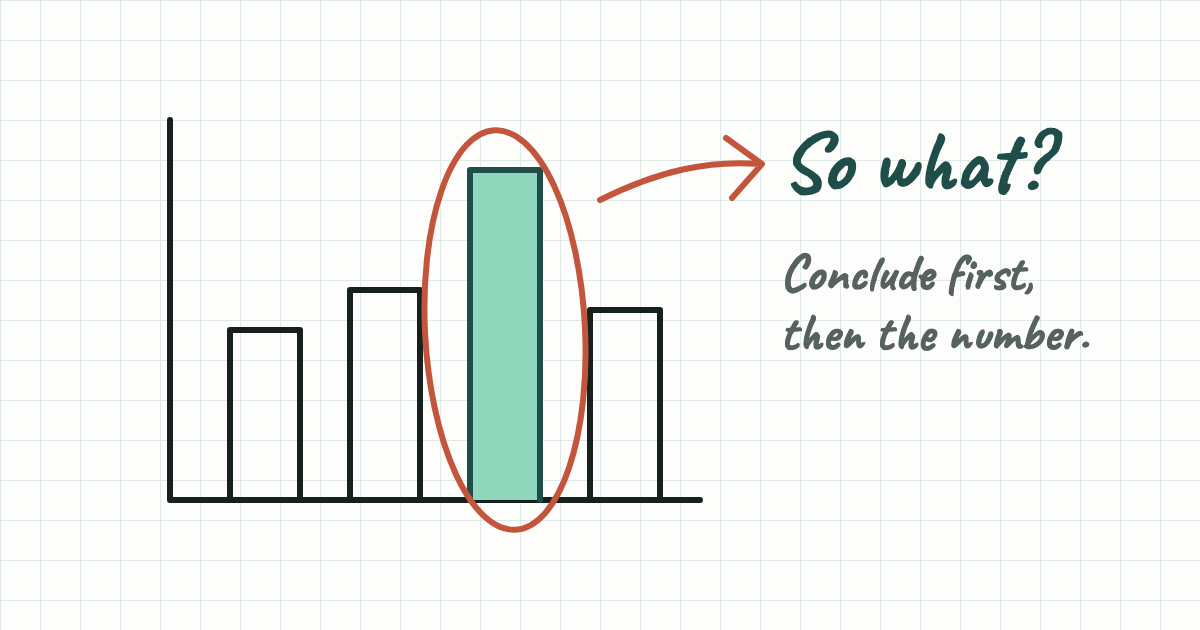
At some point in most cases, the interviewer slides a chart across the table — or shares one on screen — and says "here's some data the team pulled." The next sixty seconds are among the most heavily graded of the interview. Exhibits are where cases stop being about talking and start being about seeing. Here's the method.
What interviewers are testing with an exhibit
One skill: can you extract the decision-relevant insight from unfamiliar data, fast, out loud. Not whether you can read a bar chart — whether you can tell the client something. Every exhibit in a well-written case exists because it changes the answer: it kills a hypothesis, reveals the real driver, or contains a trap (mismatched units, percentages of different bases, a truncated axis). The candidate who finds the "so what" in under a minute reads as consultant-ready; the candidate who narrates every data point reads as a student giving a book report.
The four-step read, out loud
- Orient (10–15 seconds). Say the title, axes, units, and time period aloud: "So this shows margin by product line, in percent, over the last three years." This isn't filler — it's where you catch the units trap, and it buys your brain processing time while sounding structured.
- Find the contrast. Every exhibit has a tension: one segment growing while others shrink, the biggest revenue line with the worst margin, a cost curve crossing a price line. The chart was built to show something — find what breaks the pattern.
- Tie it to the question. Out loud: "We're trying to figure out why profits fell — and this says the decline is entirely in the retail channel."
- State the so-what with a number. "Retail margins dropped from 20% to 8% while volume held — so this looks like a pricing or cost problem in retail, not a demand problem. I'd want to look at retail pricing next." Insight, evidence, implication, next step — one breath.
The insight hierarchy
Interviewers hear four levels of exhibit response, and grade accordingly:
- Level 1 — Description: "Segment A is 40%, Segment B is 25%..." (near zero credit)
- Level 2 — Observation: "Segment A is the largest." (still just reading)
- Level 3 — Insight: "Segment A is the largest but growing slowest — the growth is all in C."
- Level 4 — Implication: "...which means the client's current sales force, built for A, is pointed at the wrong segment. That could explain the share loss we discussed."
Level 4 is the job. The consistent habit that gets you there: never end an exhibit answer without the word "which means..." — force the implication every single time, even in practice.
The traps to check every time
- Units and bases. Percent of revenue vs. percent of customers; monthly vs. annual figures on the same page.
- Truncated or dual axes. A dramatic-looking line that moves 2%.
- Averages hiding a split. A flat overall number composed of one segment soaring and another collapsing — casewriters love this one.
- The footnote. If an exhibit has a footnote, it's load-bearing.
Fifteen seconds of deliberate checking beats the minutes you lose building on a misread number.
How to drill exhibit reading
Cold exposure is the whole game — an exhibit you've seen before tests nothing. Sources of fresh charts: casebook exhibits you haven't used, and honestly any dense business chart (annual reports, The Economist) — run the four steps on it aloud in under a minute. Then get reps under real conditions: in a live mock where the interviewer hands you the exhibit mid-case and waits. That's how it works in Key Takeaways — the AI interviewer presents exhibits during the case, on camera, and the scored breakdown afterward tells you whether your analysis is landing at Level 1 or Level 4.
The bottom line
Exhibits reward a method, and the method is learnable in a week of daily reps: orient, find the contrast, tie to the question, state the so-what with a number. Do it out loud every time — the skill being graded is spoken. And never leave a chart without a "which means."
Ready to practice out loud?
Run a full spoken mock case with a live AI interviewer and get a scored breakdown at the end. Every account starts with 2 free cases.